All African countries can play a role in the automotive value chain, AAAM CEO says



There are significant opportunities to develop component manufacturing in Africa to supply vehicle manufacturers, and each country can play a role in the automotive value chain, industry organisation African Association of Automotive Manufacturers (AAAM) CEO Victoria Backhaus-Jerling has said.
Manufacturing for the automotive value chain would also support the beneficiation of resources in each country, she said on the second day of the Manufacturing Indaba, on July 15.
The African Continental Free Trade Area (AfCFTA) can be a significant driver of localisation and manufacturing on the continent. However, countries must have a policy framework in place to develop manufacturing.
There were opportunities for component manufacturing in Africa, and the AfCFTA created opportunities for countries to integrate and trade, concurred South African industry financier Industrial Development Corporation automotive and transport equipment strategic business unit head Joy Balepile.
The scale of the market created by the AfCFTA can help countries and industries to attract foreign direct investment and help economies to grow, as they provide products and services into new markets.
“However, the successful implementation of the AfCFTA is not easy, as countries have varying degrees of development and sophistication of their economies. Key success factors are to ensure peace and security on the continent, and ensure that trade frameworks and routes are in place.
“Developing cross-border infrastructure systems will also be crucial,” he said.
The future of the automotive industry was electric and the most expensive part of an electric vehicle (EV) was the battery. Many of the minerals used in EV batteries were mined in Africa, but were exported without beneficiation, skills and enterprise development organisation Automotive Industry Development Centre (AIDC) CEO Andile Africa pointed out.
Africa needs a coordinated approach to look at some level of local beneficiation. While there is no cobalt in South Africa, the Democratic Republic of Congo does have cobalt reserves, Zimbabwe has lithium reserves, while Zambia has copper.
Some value addition or manufacturing of components can be achieved, but requires that Africa engage with EV technology owners, such as Chinese manufacturers, he said.
Beneficiation of its mineral resources to supply the automotive manufacturing industry was a significant opportunity for Africa, said Backhaus-Jerling.
The AAAM is working with trade bloc the Southern African Customs Union countries on how mineral beneficiation could be achieved. Some of the AAAM member companies can produce copper products for the automotive industry, but there are very few producers of copper for vehicle wire harnesses in Africa.
“This is an attainable project, as the copper rods and foil can also be supplied into the battery value chain, which is another huge opportunity, and the copper foil can be used for batteries,” she said.
African countries imported about $50-billion of vehicles and components a year, but only about $3-billion of this was imported from other African countries, said manufacturing development organisation Localisation Support Fund CEO Irshaad Kathrada.
Intra-Africa trade was relatively small compared to other regions, with only about 17% of goods sold in Africa being made in Africa. By comparison, the next-lowest regional trade figure is that of Latin America, which derives 50% of its goods from manufacturers within the region, while 75% of the goods sold in Europe are made in the region, he said.
Regions of Africa should build their local capabilities for intra-regional trade and grow with their neighbours, but there should be a clear focus on what should be traded, he recommended.
For example, it was unlikely in the short term that EVs would be wholly built in Africa; however, countries could co-create components that plug into global supply chains. Similarly, countries could develop their refining capacity to produce precursor materials for global value chains, he said.
“Value can be added in various places along the way to build up local manufacturers and build up the foundation for converting raw materials into components for use in the global value chains,” said Kathrada.
Meanwhile, its terms of cost-competitiveness, South Africa's electricity prices were six times that of China. Automotive manufacturing was energy-heavy, albeit not as intensive as sectors such as steel production, and the issue of energy costs needed to be addressed for the country's industry to be globally competitive, said Africa.
However, it was not too ambitious for Africa to aim to produce components and inputs for the automotive and mobility value chains, said Backhaus-Jerling.
“Algeria has lower electricity costs than China. We should leverage each country's advantages to build competitive supply chains in Africa,” she said.
Additionally, micromobility presents a significant opportunity for Africa, with the number of two-wheeled vehicles in sub-Saharan Africa having increased from five-million in 2010 to 27-million in 2025.
About one-million of these two-wheeled vehicles were made and sold in Africa each year, and the AAAM aimed to support the manufacturing of about 3.5-million two-wheeled vehicles a year by 2035, she noted.
Further, it is much simpler to set up charging infrastructure for electric two- and three-wheeled vehicles and, while many of these smaller vehicles currently use fuel, a transition to electric drive-trains is expected.
To manufacture four-wheeled EV components, automotive hub countries, such as Egypt, Morocco and South Africa, should look at how their neighbours could support the automotive original-equipment manufacturers (OEMs) that they host, she advised.
Additionally, each OEM has different expectations of, and strategies for how, drive-train technology will change.
The same went for countries, with Namibia, for example, focusing on hydrogen and e-fuels for its mobility needs, while other countries were looking at electric drive trains and using solar-power systems to recharge EVs, Backhaus-Jerling pointed out.
“There is no single answer yet to what the drive train of the future will be,” she said.
Article Enquiry
Email Article
Save Article
Feedback
To advertise email advertising@creamermedia.co.za or click here
Research Reports
Projects


Latest Multimedia

Latest News


Showroom
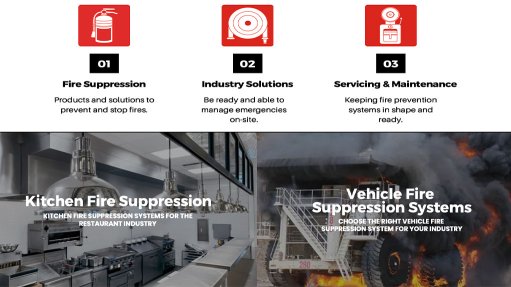
Established on 1 March, 2000, by Barries Barnard, Advanced Fire Suppression Technologies (AFST) and the Advanced Group stands as Sub-Saharan...
VISIT SHOWROOM
Established in 1983, the ASTPM is an industry association and representative body of the welded carbon steel tube and pipe manufacturers of South...
VISIT SHOWROOM
Press Office
Announcements
What's On
Subscribe to improve your user experience...
Option 1 (equivalent of R125 a month):
Receive a weekly copy of Creamer Media's Engineering News & Mining Weekly magazine
(print copy for those in South Africa and e-magazine for those outside of South Africa)
Receive daily email newsletters
Access to full search results
Access archive of magazine back copies
Access to Projects in Progress
Access to ONE Research Report of your choice in PDF format
Option 2 (equivalent of R375 a month):
All benefits from Option 1
PLUS
Access to Creamer Media's Research Channel Africa for ALL Research Reports, in PDF format, on various industrial and mining sectors
including Electricity; Water; Energy Transition; Hydrogen; Roads, Rail and Ports; Coal; Gold; Platinum; Battery Metals; etc.
Already a subscriber?
Forgotten your password?
Receive weekly copy of Creamer Media's Engineering News & Mining Weekly magazine (print copy for those in South Africa and e-magazine for those outside of South Africa)
➕
Recieve daily email newsletters
➕
Access to full search results
➕
Access archive of magazine back copies
➕
Access to Projects in Progress
➕
Access to ONE Research Report of your choice in PDF format
RESEARCH CHANNEL AFRICA
R4500 (equivalent of R375 a month)
SUBSCRIBEAll benefits from Option 1
➕
Access to Creamer Media's Research Channel Africa for ALL Research Reports on various industrial and mining sectors, in PDF format, including on:
Electricity
➕
Water
➕
Energy Transition
➕
Hydrogen
➕
Roads, Rail and Ports
➕
Coal
➕
Gold
➕
Platinum
➕
Battery Metals
➕
etc.
Receive all benefits from Option 1 or Option 2 delivered to numerous people at your company
➕
Multiple User names and Passwords for simultaneous log-ins
➕
Intranet integration access to all in your organisation